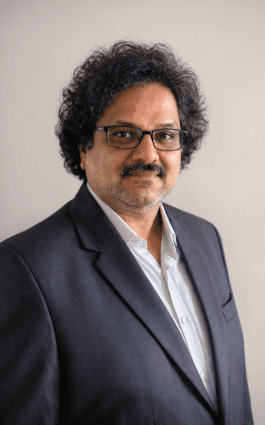
Vijay Singamsetti, PhD
Founder & Chief Executive
vijays@rudhira.com


Founder & Chief Executive
Founder & Chief Executive
vijays@rudhira.com
Dr. Vijay Singamsetty is Founder and Chief Executive Officer at Rudhira Biosciences, where he leads the company's mission to pioneer AI-driven immune and cancer digital twin technologies for precision oncology.
Vijay holds a PhD in Molecular Biology and completed postdoctoral training in Immunology at Children's Hospital Los Angeles, with additional formal clinical research training from Harvard Medical School. He brings over 20 years of experience across drug discovery and translational research, building deep expertise in cancer biology, immune system dynamics, and the translation of computational innovation into clinical application.
At Rudhira, Vijay defines the company's long-term vision, builds its scientific and technological roadmap, and drives execution across research, product, and organizational growth. He leads interdisciplinary teams across biology, data science, and engineering, and plays a central role in shaping strategic partnerships and capital formation. His focus is on translating cutting-edge science into scalable, clinically meaningful platforms — ensuring Rudhira delivers tangible impact in therapeutic development and stands as a leader in AI-enabled precision medicine.
Chief of Operations
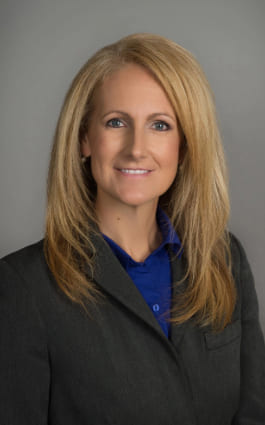
Chief of Operations
stacy.townsend@rudhira.com
Dr. Stacy Townsend is Chief Operating Officer at Rudhira Biosciences, where she leads scientific operations, development strategy, and execution frameworks that translate the company's modality into robust, scalable, and clinically relevant programs.
Stacy brings more than 20 years of experience leading biologic and therapeutic development across the full product lifecycle, with deep technical and operational expertise spanning preclinical research, translational science, CMC, clinical planning, and regulatory strategy. She has directed cross-functional teams through critical milestones including IND-enabling activities, clinical-readiness planning, and regulatory interactions. She holds a PhD in Veterinary Microbiology from Texas A&M University and a BS in Biology from the University of California, Riverside, and is a certified Project Management Professional (PMP) and SAFe Scrum Master.
At Rudhira, Stacy plays a central role in bridging novel biological concepts with established development and data standards. She works closely with internal scientific teams and external collaborators to ensure rigor in study design, data integrity, and program governance — enabling clear decision-making and efficient progression through development phases. Her structured approach combines scientific rigor, systems-level thinking, and clear communication to advance mission-driven therapeutic development while preserving the flexibility innovation demands.
Chief of Technology
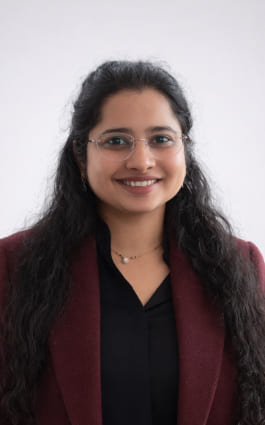
Chief of Technology
susmitha.shankar@rudhira.com
Dr. Susmitha Shankar is Chief Technology Officer at Rudhira Biosciences, where she leads the development of the company's AI-driven platforms at the intersection of cancer genomics, systems immunology, and multi-omics data integration.
Susmitha brings deep expertise in spatial transcriptomics, protein quality control, and computational biology, with a strong focus on translating complex biological data into clinically meaningful insights. Her scientific work has advanced understanding of fundamental cellular processes — including protein degradation and localization — and contributed to the broader field of cellular quality control and its relevance to disease biology. She holds a PhD from the Institute of Molecular Biology, Germany, and completed postdoctoral training at Peter MacCallum Cancer Centre, Australia.
At Rudhira, Susmitha is responsible for architecting and scaling the company's technology stack, integrating multi-omic data streams with advanced AI models to power immune and cancer digital twins. She is also leading the design and implementation of Rudhira's neo-antigen discovery capabilities. Widely recognized for her ability to bridge biology and computation, she ensures Rudhira's platform is both scientifically rigorous and technologically robust — capable of supporting next-generation precision oncology and immunotherapy development.
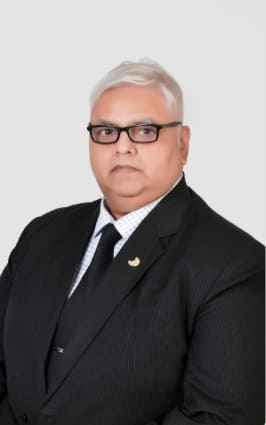
Principal Translational Science Strategist
Principal Translational Science Strategist
akash.ranjan@rudhirabio.com
Dr. Ranjan brings over 26 years of leadership in biomedical research, technology development, and scientific governance to Rudhira, where he helps shape the company’s long-term scientific and innovation strategy. His career spans foundational discoveries in human infectious and genetic diseases, as well as the translation of these insights into novel therapeutic approaches, providing a strong backbone for Rudhira’s AI-driven immune and disease modeling platforms.
At a premier national research laboratory in India, Dr. Ranjan led pioneering efforts to decode molecular mechanisms underlying complex diseases, contributing to the development of new chemotherapeutic strategies. Beyond his research contributions, Dr. Ranjan has been instrumental in building large-scale scientific and computational infrastructure. He established the Sun Centre of Excellence in Medical Bioinformatics in Hyderabad in collaboration with Sun Microsystems and has contributed to major national initiatives in grid computing, supercomputing (C-DAC PARAM), and cybersecurity.
An accomplished academic mentor, Dr. Ranjan, serves as Adjunct Professor at several reputed Universities, where he has guided several PhD scholars. He holds a B.Sc. (Hons.) in Human Biology and an MS. in Biotechnology from AIIMS, New Delhi, and earned his PhD from the National Institute of Immunology (NII), JNU, India.
At Rudhira, Dr. Ranjan provides strategic guidance at the intersection of biology, data science, and high-performance computing. His expertise in building scalable scientific infrastructure and integrating computational approaches with biomedical research is central to advancing Rudhira’s immune and cancer digital twin platform, enabling more precise modeling, faster discovery, and scalable innovation in precision medicine.
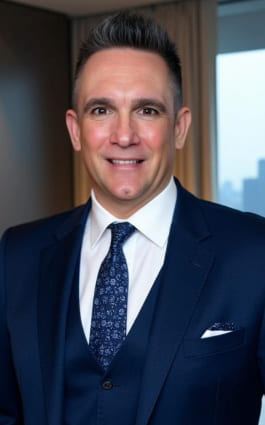
Founding Strategic Advisor - Clinical and Partnerships
Founding Strategic Advisor - Clinical and Partnerships
xavier.lauricia@rudhirabio.com
Dr. Xavier Laucirica serves as Principal Strategy Advisor, Clinical & Partnerships at Rudhira Biosciences, bringing deep biopharma leadership across virology, oncology, and neuroimmunology.
Xavier previously held senior medical leadership roles at Roche/Genentech, including Senior Medical Director, where he led strategic medical initiatives, cross-functional launch planning, scientific engagement, and external partnership development across complex therapeutic areas. His background spans medical affairs, clinical strategy, KOL engagement, congress planning, evidence generation, and scientific communications, with a strong track record of translating innovation into high-impact launch and lifecycle execution.
At Rudhira, Xavier is positioned to contribute across multiple strategic priorities, including FDA-facing approval strategy for new testing modalities, KOL identification and development, congress planning and scientific presence, NIH grant proposal development, white paper publication, advisory board and roundtable design, and leadership of health economics and real-world evidence strategy. He also brings valuable external engagement capabilities — including liaison development with leading immuno-oncology experts at Dana-Farber and Memorial Sloan Kettering — and thought-leader strategy across CRC, NSCLC, and gynecologic cancers.

Senior Clinical Advisor - Infectious Diseases
Senior Clinical Advisor - Infectious Diseases
ravi.padmanabhan@rudhirabio.com
Dr. Ravindran Padmanabhan serves as Senior Clinical Advisor for Infectious Diseases at Rudhira Biosciences, providing clinical guidance that shapes the company's AI-driven immune and cancer digital twin platforms.
With over 25 years of experience, Ravi brings deep expertise in host–pathogen interactions, immune modulation, and clinical decision-making — insights directly relevant to tumor–immune dynamics and precision oncology. He earned his medical degree from Bangalore University, pursued postgraduate training in the United Kingdom (MRCP, UK), and completed his residency and Infectious Diseases fellowship at the Cleveland Clinic Foundation in Ohio, where he developed extensive experience managing complex immune-mediated conditions in immunocompromised and oncology patients. He currently serves as Medical Director of Infectious Diseases at Cigna/EviCore Healthcare, leading clinical strategy and utilization management at scale.
At Rudhira, Ravi integrates real-world clinical insight into the company's AI-driven immune and cancer digital twin platforms, ensuring outputs are clinically relevant and actionable for physicians. He brings a nuanced understanding of immune dynamics in complex, immunocompromised, and diverse patient populations, helping translate tumor–immune interactions into insights that support treatment decisions — enhancing the platform's ability to predict therapy response, inform immunotherapy strategies, and align with real-world clinical workflows.

Head of Computational Pathology
Head of Computational Pathology
sujana.samala@rudhirabio.com
Dr. Sujana Samala is Head of Computational Pathology at Rudhira Biosciences, where she leads the pathology-driven validation layer of the company's AI-based neoantigen discovery platform.
Sujana is a board-certified pathologist with over 20 years of experience in anatomic pathology, clinical laboratory medicine, and cytopathology. She completed her residency and a clinical pathology fellowship at UNC Chapel Hill, and for the past decade has specialized in gastrointestinal pathology, contributing extensively to clinical trial programs focused on targeted immunotherapies for cancer. She also brings extensive clinical trial consulting experience, supporting biotechnology and pharmaceutical organizations with pathology oversight, biomarker development, and regulatory-aligned study design for immuno-oncology programs.
At Rudhira, Sujana interprets cytopathology and histopathology slides to support tumor microenvironment characterization, ensuring complex biological signals are accurately translated into structured data for AI model development. She works closely with computational scientists and AI engineers to guide dataset annotation strategies, model validation frameworks, and biological interpretation of outputs — keeping Rudhira's AI systems grounded in clinically meaningful pathology insight while capturing the complexity of tumor heterogeneity and immune contexture, and advancing the company's mission to accelerate neoantigen-based precision cancer therapies.
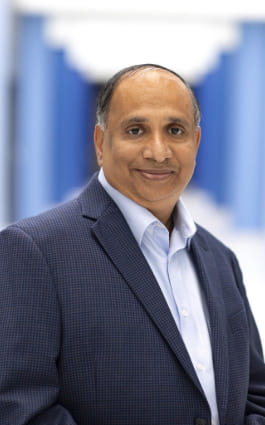
Principal AI Advisor
Principal AI Advisor
sridhar.iyengar@rudhirabio.com
Sridhar Iyengar is Principal AI Advisor at Rudhira Biosciences, bringing deep expertise in artificial intelligence, data systems, and large-scale software engineering to advance the company's mission of building AI-driven immune and cancer digital twins.
Sridhar is currently an IBM Distinguished Engineer and CTO in the Financial Services industry, where he serves as a trusted advisor to executives and technical leaders on the design, development, and scaling of enterprise-grade AI and data platforms. Over the past eight years, he has advised some of the world's largest banking and insurance organizations on modernizing complex systems and embedding automation and AI into business and IT workflows. Prior to this, he spent more than two decades in R&D contributing to foundational technologies including IBM Watson and IBM WebSphere. He holds a bachelor's degree in electronic engineering and a master's in computer science, and is the inventor of several patents in software engineering and data management.
At Rudhira, Sridhar helps shape the architecture and scalability of the platform, ensuring AI systems for immune and cancer digital twins are robust, secure, and production-ready for real-world clinical and scientific applications at scale. He also serves on the board of the Wiskott-Aldrich Foundation, supporting research in gene therapy and rare diseases — reflecting his long-standing commitment to advancing healthcare innovation through technology.

Chief of Product
Chief of Product
vineeth.kalluru@rudhirabio.com
Vineeth Kalluru is Chief of Product at Rudhira Biosciences, where he leads the product vision for an AI-native multiomics platform for Immune Digital Twins.
Previously, Vineeth spent over six years working across multiple layers of the AI stack, including as a Solutions Architect at NVIDIA, a deep learning compiler engineer at SambaNova Systems, and a computer architect modeling next-generation TPU performance at Google. This breadth of experience, from silicon-level optimization to enterprise-scale GenAI deployment, gives him a unique perspective on building AI systems that are both technically advanced and production-ready. He holds a Masters degree in Electrical and Computer Engineering from Carnegie Mellon University.
What draws Vineeth to Rudhira is the belief that the immune system is one of the most data-rich yet under-leveraged frontiers in medicine, and that the opportunity to build foundational infrastructure in this space is now. His focus is on translating the complexity of multiomics and immune modeling into products that researchers and clinicians can trust and act upon. He brings not only deep technical expertise, but also strong product discipline to ensure Rudhira’s AI systems are rigorous for science and scalable for clinical use.
Multi-omics data captures patient-specific immune-tumor interactions, but complexity obscures actionable insights. We are applying mechanistic modeling and advanced AI for neoantigen processing, simulate tumor microenvironment dynamics, including immune cell infiltration, cytokine signaling, and exhaustion pathways. Our goal is to turn immune heterogeneity into precise, predictive clarity.
We believe that AI can unlock immune-tumor complexity at scale. We are betting on training AI models on Multi-omics data to predict Neoantigens grounded by biophysical principles that accurately forecast MHC binding, TCR recognition, and immunogenicity for vaccine/drug design. The trained AI models will lead us to creating world's first accurate and exhaustive digital-twins to simulate dynamic immune networks like antigen processing, T-cell trafficking, cytokine cascades, and tumor microenvironment evolution under thousands of therapy scenarios.
Partner with us in co-designing neoantigen pipelines and digital twins for your vaccines.
Talk to us about your patient-specific simulation needs, biomarkers and virtual trials
Collaborate with us to analyze multi-omics data for immune modeling in oncology research.
Find answers to common questions about Rudhira AI's immune digital twin technology for precision oncology.
A patient-specific virtual model of the immune system and tumor microenvironment in oncology, built from multi-omics data to simulate antigen presentation, T-cell responses, and therapy outcomes in real time.
We model responses to various existing cancer therapies predicting efficacy, resistance mechanisms, and optimal dosing/sequencing.
Oncology multi-omics (WGS, RNA-seq, proteomics, immunopeptidomics), tumor microenvironment profiling, clinical history, and longitudinal response data—processed into unified patient representations.
From raw oncology data upload to actionable insights: hours for single cancer patients, days for cohort analysis—enabling rapid iteration in trial design and adaptive cancer therapy.
Leave us your email and we'll get back to you